
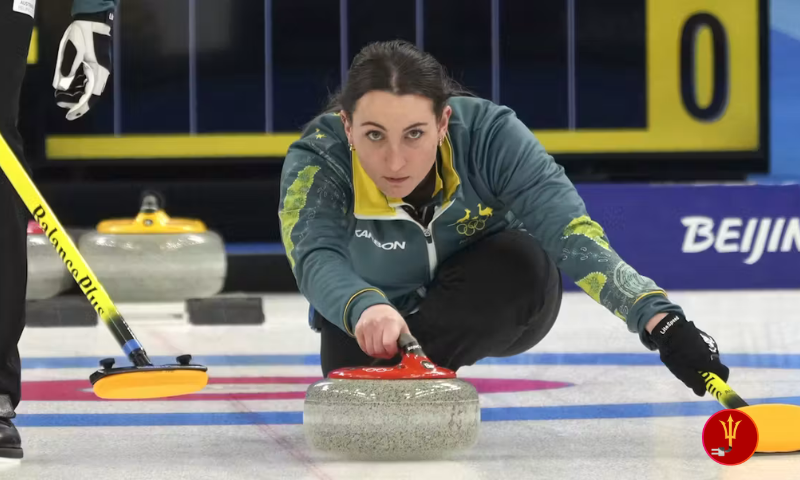
Curling is one of the most unique sports in the Winter Olympics. To many new viewers, it may look like a simple game where players slide heavy stones across the ice toward a target. However, once you watch a match closely, you quickly notice that there is much more happening than just throwing a stone. One of the most important parts of the game is sweeping, which is done using special curling brushes. Players sweep the ice vigorously in front of a moving stone, and this action can have a significant impact on how the stone travels.
Many fans wonder, how do brushes affect the stone’s path in Olympic curling? The answer involves a combination of physics, strategy, teamwork, and skill. Sweeping does not push the stone directly. Instead, it changes the condition of the ice in front of the stone. As a result, the stone can travel farther, stay straighter, or curl less than it normally would. Understanding this process helps fans appreciate why sweeping is such a critical part of Olympic curling.
In this article, we will explore how do brushes affect the stone’s path in Olympic curling? We will look at the science behind sweeping, the role of the curl, the different types of brushes, and why teams spend so much energy sweeping during a match.
What Is Sweeping in Olympic Curling?
Sweeping is the action of moving a curling brush rapidly back and forth on the ice directly in front of a moving stone. Usually, two players sweep while another player, known as the skip, directs the shot and decides when sweeping is needed. The sweepers must react quickly because even small changes in the stone’s movement can affect the outcome of a shot.
The main purpose of sweeping is to influence how the stone behaves as it slides across the ice. Curling stones weigh around 20 kilograms, so players cannot simply alter their direction with physical force. Instead, they use brushes to affect the ice surface. By doing so, they can help the stone travel a greater distance and reduce the amount of curl it experiences.
When viewers first see sweeping, they often think the players are cleaning the ice. While the brushes do remove some frost and debris, their primary purpose is much more strategic. Sweeping creates friction and heat, which changes the interaction between the stone and the ice.
Why Do Curling Stones Curl?
Before understanding how do brushes affect the stone’s path in Olympic curling?, it is important to know why curling stones curl in the first place. When a player releases a stone, they give it a slight rotation. This rotation causes the stone to curve gradually as it moves down the sheet of ice.
The curling sheet is not perfectly smooth. Tiny droplets of water are sprayed onto the ice and then frozen. These frozen droplets create a textured surface known as pebble ice. The stone rides over these small bumps instead of sliding on completely flat ice.
As the stone rotates and moves across the pebbled surface, differences in friction cause it to curve. This curved movement is called the curl. Skilled players use curl to navigate around opponents’ stones and place their own stones in strategic positions.
Without curl, curling would be a very different game. Much of the sport’s strategy depends on predicting and controlling how much a stone will curve during its journey.
How Do Brushes Affect the Stone’s Path in Olympic Curling?
The answer to how do brushes affect the stone’s path in Olympic curling? lies in the relationship between friction and temperature. When players sweep the ice, the brush head moves rapidly across the surface. This movement generates a small amount of heat.
The heat slightly warms the tops of the ice pebbles. Although the temperature change is tiny, it is enough to reduce friction between the stone and the ice. With less friction, the stone loses speed more slowly and travels farther.
Sweeping also affects the amount of curl. Since the stone encounters less resistance, it does not curve as much as it normally would. As a result, sweepers can help keep a stone on a straighter path. This ability allows teams to make precise adjustments after the stone has already been released.
Therefore, when people ask, how do brushes affect the stone’s path in Olympic curling?, the simple answer is that brushes reduce friction, increase distance, and decrease curl.
The Science Behind Sweeping
Scientists have studied curling for many years because the sport involves fascinating physics. Research shows that sweeping can raise the temperature of the ice surface by a small amount. Even a slight increase in temperature can change how the stone interacts with the pebbled ice.
As the brush moves across the ice, it smooths the tops of the pebbles. This creates a more favorable surface for the stone to travel over. Because the stone encounters less resistance, it maintains more of its momentum.
The reduction in friction means that the stone can continue moving for a longer distance. At the same time, the smoother path reduces the forces that cause the stone to curl. Consequently, sweepers gain some control over both speed and direction.
Although the effect may appear small, elite curlers understand that even a few centimeters can decide the outcome of an Olympic match. That is why sweeping is performed with such intensity and precision.
Table: Effects of Sweeping on a Curling Stone
| Sweeping Action | Effect on Ice | Effect on Stone |
|---|---|---|
| Fast sweeping | Warms pebble surface | Stone travels farther |
| Continuous sweeping | Reduces friction | Stone loses less speed |
| Strong sweeping | Smooths ice surface | Stone curls less |
| No sweeping | Normal friction remains | Stone curls more |
| Late sweeping | Limited effect | Small path adjustment |
Why Teams Sweep So Hard
Anyone watching Olympic curling will notice how much effort players put into sweeping. Sweepers often appear exhausted after a shot because they use significant energy while brushing the ice at high speed.
Teams sweep hard because every shot matters. A stone that stops too early may miss its target completely. Likewise, a stone that curls too much could collide with another stone and ruin a carefully planned strategy.
Strong sweeping allows teams to maximize control. Even when a player slightly underthrows a stone, sweepers may help it travel the extra distance needed. This teamwork often saves important shots during a match.
The physical demands of sweeping mean that curlers must maintain excellent fitness levels. Modern Olympic curling requires both mental strategy and athletic endurance.
Types of Curling Brushes
Curling brushes have evolved significantly over the years. Early curlers used simple brooms made from straw or corn fibers. Today, Olympic athletes use advanced brushes designed specifically for performance.
Modern brushes feature lightweight handles made from materials such as carbon fiber. The brush heads contain specially engineered fabrics that provide effective sweeping while meeting competition regulations.
Officials closely monitor brush technology because equipment can influence the game. In recent years, governing bodies introduced rules to ensure that brushes do not provide unfair advantages.
Despite these improvements, the fundamental purpose remains the same. Regardless of design, brushes exist to help teams control the stone’s movement across the ice.
Table: Old vs Modern Curling Brushes
| Feature | Traditional Brooms | Modern Brushes |
|---|---|---|
| Material | Straw or corn fibers | Synthetic fabric |
| Weight | Heavier | Lighter |
| Durability | Limited | High |
| Sweeping Efficiency | Basic | Advanced |
| Olympic Usage | No | Yes |
How Sweepers Communicate During a Shot
Communication plays a major role in curling. Sweepers constantly talk with the skip and each other while a stone travels down the ice. This communication helps the team decide whether to sweep and how aggressively to do it.
The skip watches the stone carefully and provides instructions. If the stone appears slow, the skip may call for intense sweeping. If the stone is moving too fast, the sweepers may stop.
Experienced sweepers learn to judge speed and line almost instantly. Their ability to read the ice allows them to make quick decisions that can change the result of a shot.
This teamwork is another reason why understanding how do brushes affect the stone’s path in Olympic curling? is so important. Sweeping works best when every team member communicates effectively.
Why Sweeping Is Essential in Olympic Curling
Sweeping is not just an extra skill in curling. It is a core part of the sport. Without sweeping, teams would have far less control over where their stones finish.
The ability to influence distance and curl makes sweeping one of the most valuable tools available to curlers. Teams use it on almost every shot during a match.
Because Olympic competitions are extremely close, small advantages can determine winners and losers. Effective sweeping often provides those crucial advantages.
When fans ask, how do brushes affect the stone’s path in Olympic curling?, they are really asking about one of the sport’s most important strategies.
5 Small FAQs
1. How do brushes affect the stone’s path in Olympic curling?
Brushes reduce friction on the ice, helping the stone travel farther and curl less.
2. Do brushes push the stone?
No. Brushes never touch the stone directly. They only affect the ice surface.
3. Why do curlers sweep so fast?
Fast sweeping creates more heat and reduces friction more effectively.
4. Can sweeping change direction completely?
No. Sweeping can influence the path but cannot completely redirect a stone.
5. Are Olympic curling brushes regulated?
Yes. Officials set rules to ensure all brushes meet approved standards.
Conclusion
Understanding how do brushes affect the stone’s path in Olympic curling? helps reveal the true complexity of this fascinating Olympic sport. Sweeping changes the ice surface by reducing friction and slightly warming the pebbled ice. As a result, stones travel farther and curl less, giving teams greater control over each shot. This simple-looking action combines science, teamwork, fitness, and strategy in a way that makes curling unique among Olympic sports. The next time you watch a curling match, pay close attention to the sweepers. Their brushes may look ordinary, but they play a huge role in determining where every stone ends up.
