
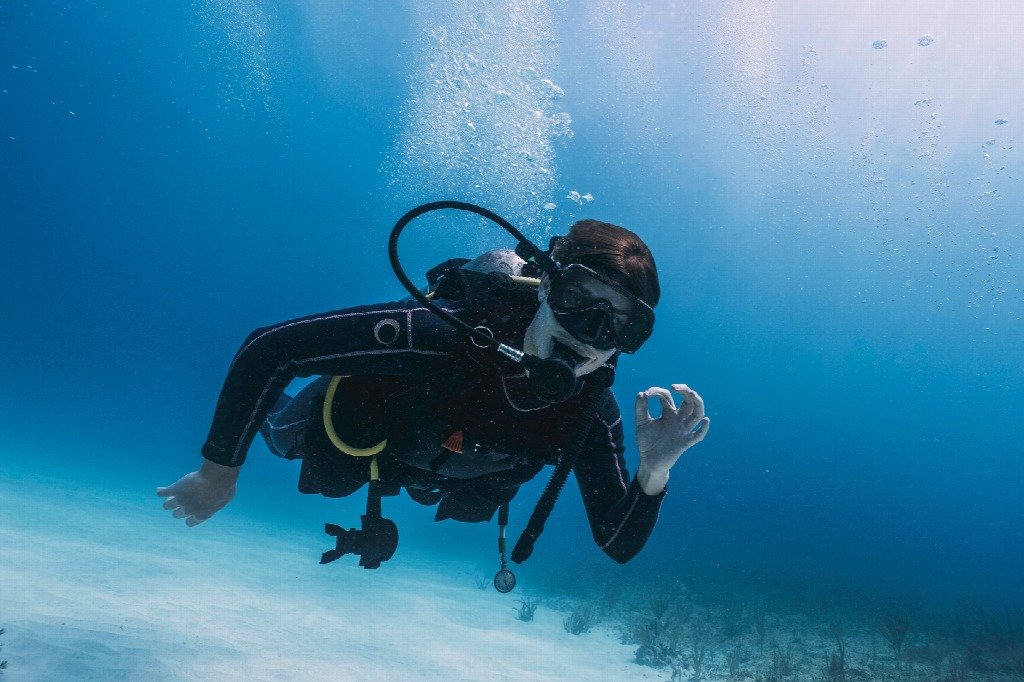
Open water scuba diving is usually the first formal certification most divers earn, marking the point where diving shifts from a supervised trial dive to something a person can do more independently. In this article, we will look at where the certification came from, what it actually allows a diver to do, and how it fits into the broader path of learning to dive.
Where Did Open Water Scuba Diving Certification Come From?
Structured diver training developed alongside the growth of recreational scuba equipment in the mid-20th century, as more people wanted to dive without needing a background in commercial or military diving. Organizations eventually standardized training into levels, with Open Water becoming the entry point most new divers start from today.
Why Open Water Diving Appeals to Beginners
Part of the appeal is accessibility. Open Water courses are structured to take a few days, combining classroom learning, confined water practice, and a set number of open water dives. That pacing makes it approachable for people without a diving background.
Is Open Water Certification Required to Dive?
In most cases, yes. Dive centers generally require proof of certification before allowing independent dives, since it confirms a diver understands core safety skills like buoyancy control and emergency procedures. Uncertified divers can still dive under direct supervision through introductory programs, but these are more limited in scope.
What Does “Open Water” Actually Mean?
The term refers to diving conducted outside a pool or confined training environment, typically in natural settings like the ocean or a lake. Certification at this level usually comes with a depth limit, most often around 18 meters, which distinguishes it from more advanced training.
Common Misconceptions vs Reality
Several myths about scuba certification circulate among beginners, often creating unnecessary barriers to taking the leap. Here’s what the reality actually is:
Open Water certification means unlimited depth
Depth is actually capped at around 18 meters for Open Water certified divers. Deeper dives require additional specialty training and certification beyond the basic Open Water level.
Certification never expires or requires practice
While certification cards don’t technically expire, your skills fade without regular diving. Most instructors recommend refresher training after 6+ months without diving to ensure you’re comfortable and safe.
It’s only for young, highly athletic people
Reasonable fitness is generally sufficient for recreational diving. Many divers in their 50s, 60s, and beyond dive regularly and comfortably, proving age and elite athleticism aren’t requirements.
How Open Water Certification Is Taught Around the World
Training standards are fairly consistent internationally, though pacing and group size can vary by dive center. Warmer, calmer destinations tend to attract higher numbers of first-time students, since conditions make early open water dives more comfortable.
What Open Water Certification Allows You to Do
Once you earn your Open Water certification, you gain specific privileges in the diving world. However, there are also clear boundaries on what’s included at this level and what requires additional training.
Dive independently with a buddy
Yes, you can dive independently with a buddy within depth limits (typically 18 meters) and appropriate conditions. You no longer need an instructor present for these dives.
Rent or fill dive tanks
Yes, dive shops will rent equipment and fill tanks with proof of your certification card. This is one of the main practical benefits of being certified.
Dive without supervision at night
Typically not at Open Water level. Night diving requires additional specialty certification and training beyond your basic Open Water card.
Conduct unlimited dives
Yes, there’s no limit on how many dives you can do once certified, as long as conditions are appropriate and you’re following safety guidelines.
Lead groups or teach others
No, this requires Divemaster or instructor certification. Open Water divers can only participate as divers, not as leaders or educators.
Is Open Water Diving Still Growing in Popularity?
Certification numbers have generally trended upward over recent decades, driven partly by more accessible dive travel and training options. Growth isn’t uniform across regions, but demand for beginner-level courses remains steady in most established diving destinations.
Is Open Water the Only Certification Level?
Open Water is only the starting point. Divers who want to go further typically progress through Advanced Open Water, Rescue Diver, and eventually Divemaster, with many choosing to teach through instructor development programs. Bali stands out as one of the world’s most popular destinations for diver training at every level, from certification courses to advanced specialties.
An IDC in Bali offers comprehensive instructor development training in an environment where you can practice teaching across some of the planet’s most renowned dive sites, making it an ideal launching point for aspiring dive professionals.
Conclusion
Open water scuba diving certification gives new divers the foundation needed to explore underwater environments with a reasonable degree of independence. It isn’t the end of the learning process, but for most people, it’s the step that makes everything that follows possible. For those who develop a passion for diving and want to share it with others, instructor development becomes the natural next chapter.
Many pursue their IDC training at popular dive destinations where they can gain experience across varied conditions, an IDC in Nusa Lembongan is one such option, offering the chance to teach while building real-world skills in a working dive environment.
