
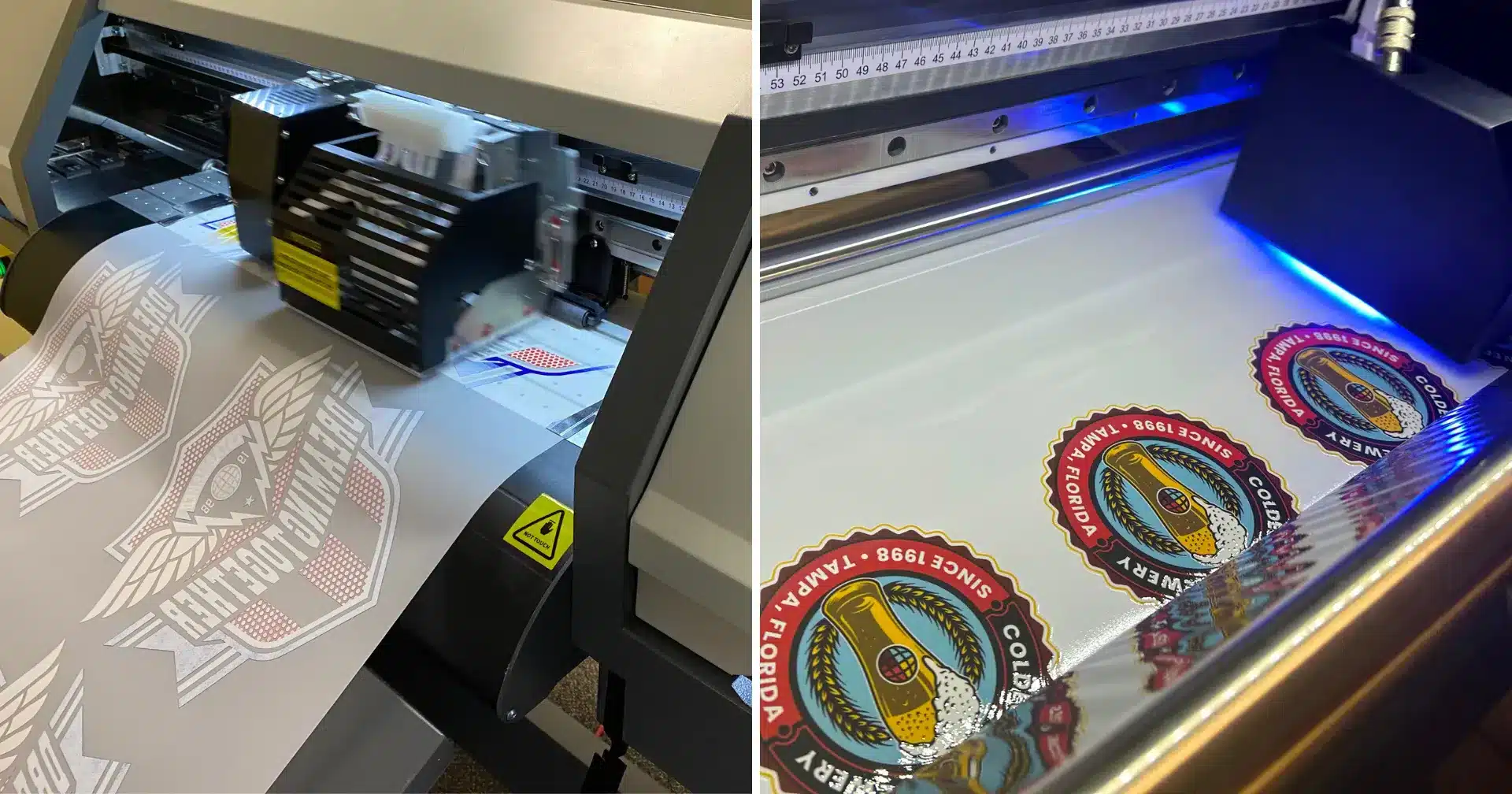
DTF and UV DTF printing are two popular methods for printing designs on clothes, gifts, and other items. Many business owners and hobbyists want to know which one works better for their needs. In this article, we explain both technologies in simple terms. We cover what they are, how they differ, their advantages and disadvantages, and when to use each one. By the end, you will have a clear understanding to help you make the right choice.
What is DTF Printing?
DTF stands for Direct to Film printing. It is a process where you print your design onto a special film using a printer with special inks. After printing, you apply a hot melt powder on the back of the film. Then you use heat to transfer the design from the film onto fabric or other surfaces.
The process is quite straightforward. First, the printer creates the image on the film in mirror mode. Next, the adhesive powder is added and cured with heat. Finally, you press the film onto the material using a heat press machine. Once it cools, you peel off the film and the design stays on the product.
DTF printing works well on many types of fabrics, including cotton, polyester, blends, and even dark colors. The prints are soft to touch and can stretch with the fabric without cracking easily. This method has become very popular for custom t-shirts, hoodies, and sportswear because of its good quality and reasonable cost.
What is UV DTF Printing?
UV DTF printing is a newer technology that also prints on film but uses different inks and curing methods. UV means ultraviolet light. The printer uses special UV inks that get hardened instantly when exposed to UV light.
In UV DTF printing, you print both the color layer and a white base layer on a special film. Then you apply a clear adhesive layer on top. After printing, you cure the film with UV light. To transfer the design, you simply peel the sticker-like print and stick it onto the surface. No heat press is needed for the final transfer in most cases.
This method is very good for hard surfaces like phone cases, mugs, wood, metal, glass, and acrylic. The prints have a glossy finish and strong adhesion. UV DTF is growing fast because it works on materials that traditional DTF cannot handle easily.
Key Differences Between DTF and UV DTF
The main difference between DTF and UV DTF is the type of materials they work best on. Standard DTF is designed mainly for fabrics and flexible surfaces. UV DTF works better on rigid and hard items.
Another big difference is the transfer process. DTF needs a heat press machine and pressure to bond the design to the fabric. UV DTF is more like a sticker – you peel and stick it directly, which makes it faster and easier for some users.
Ink and curing methods are also different. DTF uses water-based or pigment inks with heat curing powder. UV DTF uses UV-curable inks that dry instantly under special lights. This makes UV DTF production faster in some steps.
Print durability also varies. DTF prints on clothes can survive many washes if done correctly. UV DTF prints on hard surfaces offer excellent scratch resistance and waterproof qualities.
Pros of DTF Printing
DTF printing has many advantages. It produces vibrant colors and excellent detail, even on dark fabrics. The prints feel soft and comfortable to wear, which customers like.
It works on a wide range of fabric types without needing pre-treatment in most cases. This saves time and money compared to other methods like DTG printing.
DTF is cost-effective for small to medium production runs. You can print single items or small batches without high setup costs. The equipment is also becoming more affordable for home users and small businesses.
Another plus is the durability on textiles. Good DTF prints can last through dozens of washes while keeping their color and shape.
Cons of DTF Printing
DTF printing also has some limitations. The process requires a heat press, which adds to equipment costs. You need space and proper temperature control for consistent results.
The film and powder materials can create some waste if you make mistakes during the learning stage. It also takes more steps than direct printing methods, so production time per item is longer.
For very large orders, other methods like screen printing might be cheaper. DTF is best for custom and smaller quantities.
Pros of UV DTF Printing
UV DTF printing offers several strong benefits. The biggest advantage is its ability to print on hard surfaces that other methods cannot handle well. You can decorate phone cases, tumblers, signs, and promotional gifts easily.
The process is simple and clean. Many steps are faster because UV light cures the ink instantly. This means less waiting time between printing and finishing.
UV DTF prints have a nice glossy look and strong protection against water and scratches. The designs stay bright for a long time even with daily use.
It requires less equipment than DTF for the transfer stage. You do not always need a heat press, which makes it more convenient for small workshops.
Cons of UV DTF Printing
UV DTF printing also has drawbacks. The prints on hard surfaces can sometimes feel a bit raised or thick compared to other decoration methods. This may not suit products where a completely smooth finish is needed.
The cost of UV films and inks can be higher than standard DTF materials. It may not be the cheapest option for very high-volume production.
While great for hard items, UV DTF is not ideal for soft fabrics. The prints may not stretch well and could crack on clothing materials.
Some users report that adhesion can vary depending on the surface type. Testing on different materials is important before large production.
Common Applications for Both Methods
Businesses use DTF printing mostly for apparel. Custom t-shirts, hoodies, tote bags, and uniforms are very common. It is popular in the fashion and sports industries.
UV DTF printing is widely used for personalized gifts, phone accessories, home decor, and promotional products. Many companies use it for branding on mugs, bottles, pens, and signage.
Some businesses combine both technologies. They use DTF for clothing lines and UV DTF for matching hard goods like keychains or packaging.
How to Choose Between DTF and UV DTF
Your choice depends on what you want to print. If your main products are t-shirts and fabrics, go with DTF printing. If you focus on hard items like phone cases and promotional gifts, UV DTF is usually better.
Consider your production volume and available equipment. DTF needs a heat press. UV DTF needs a UV curing station but simpler transfer steps.
Think about your customers too. What finish do they prefer? Soft feel for clothes or glossy protection for accessories?
Budget and learning curve also matter. Start with the method that matches your current products and expand later.
Tips for Getting Good Results
No matter which method you choose, quality matters. Use good quality films, inks, and machines. Keep your workspace clean and control temperature and humidity.
Always test prints on sample materials before big orders. Follow the manufacturer’s instructions for curing times and temperatures.
Store materials properly to avoid moisture damage. Regular maintenance of your printer will give better print quality and longer machine life.
Final Thoughts
DTF and UV DTF printing are both useful technologies that open many opportunities for custom product businesses. DTF excels at fabric printing with soft and flexible results. UV DTF offers easy application and strong performance on hard surfaces.
Understanding the differences helps you pick the right method for your projects and save time and money. Many successful print shops use both methods to offer a full range of services to their customers.
If you are looking for reliable equipment and materials for DTF and UV DTF printing, visit https://www.dtflinko.com/ for more information and quality solutions.
Both printing methods continue to grow as demand for custom products increases. Whether you are just starting or expanding your business, learning these technologies can help you meet customer needs and stay competitive in the market. Take time to test and practice, and you will achieve professional results with either method.
