
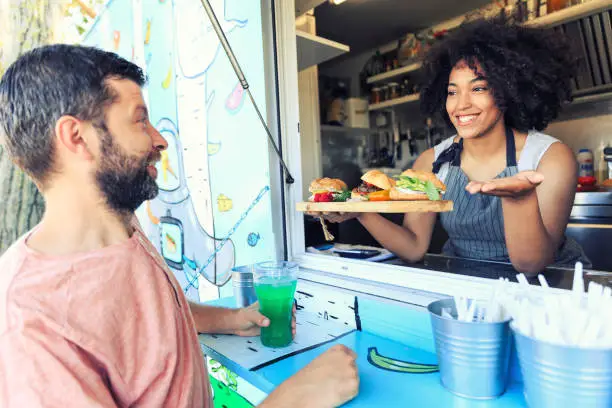
Think back to the last five meals you ate. Which ones can you recall with perfect clarity? Chances are, if there’s a food truck meal in that mix, you remember it better than the restaurant dinners. Not because the food was necessarily better, but because something about the food truck experience etches itself into your memory in a way that indoor dining rarely does.
The Memory-Making Machine
Memory formation isn’t just about what you eat. It’s about the entire sensory and emotional context surrounding the experience. Food trucks create a perfect storm of memory-making conditions that restaurants, with all their comfort and polish, simply can’t replicate.
When you order from a food truck, you’re engaging multiple senses simultaneously in ways that create stronger neural pathways. The smell of cooking food hits you before you even reach the window because there’s no wall separating the kitchen from your nose. You hear the sizzle of ingredients on the grill, the chatter of other customers, maybe traffic or birds or street musicians nearby. You feel the sun on your face or the wind in your hair. You’re physically standing, moving, existing in space rather than being seated and stationary.
All of these sensory inputs combine to create what psychologists call “encoding specificity.” Your brain doesn’t just remember the taste of that Korean taco. It remembers the entire constellation of sensations that accompanied it, making the memory more vivid and easier to recall.
The Novelty Factor
Your brain pays special attention to novel experiences. It’s an evolutionary adaptation that helped our ancestors remember where to find food and avoid danger. Food trucks trigger this novelty response in ways that familiar restaurants don’t.
Even if you’ve visited the same food truck multiple times, the experience varies. Maybe it’s parked in a different location. Perhaps the weather is different. The people around you change. The menu might feature a daily special. These small variations keep each visit feeling fresh and memorable.
Restaurants, by contrast, work hard to provide consistency. The same tables, the same lighting, the same menu, the same service flow. This consistency is valuable for comfort and reliability, but it’s terrible for memory formation. When every visit blends together, individual meals become forgettable.
Food trucks in Melbourne understand this dynamic well. They rotate locations, update menus seasonally, and create limited-time offerings that give people reasons to pay attention and remember specific visits rather than letting them blur into generic “that time I ate at a food truck” memories.
The Adventure Narrative
Humans are storytelling creatures. We remember events better when they fit into a narrative structure. Food truck meals naturally create mini-adventure stories in ways that restaurant meals don’t.
There’s the quest element: finding the truck, maybe checking social media to see where it’s parked today. There’s the journey: walking through a park or discovering a new neighborhood to reach it. There’s the challenge: deciding what to order with limited information. There’s the climax: receiving your food and taking that first bite. There’s even a resolution: finishing your meal and returning to your day, changed by the experience.
Restaurant dining follows a more predictable script. You make a reservation, you arrive, you’re seated, you order, you eat, you pay, you leave. It’s comfortable but not particularly memorable. Food truck dining writes itself into your memory as a small story, complete with choices made and mild uncertainties resolved.
The Emotional Connection
Memory strength correlates directly with emotional intensity. Food truck meals tend to carry more emotional weight than restaurant meals because of the social and environmental context in which they occur.
You’re often eating food truck meals with friends or coworkers during breaks from routine. There’s a sense of escape, even if brief. You might be sitting in a park, people-watching, laughing about something that happened that morning. Or you’re at a festival, caught up in the energy of a crowd. The food becomes intertwined with these positive emotional experiences.
Even eating alone at a food truck feels different from eating alone at a restaurant. There’s less social awkwardness, more opportunity for casual interaction with strangers, and a sense of participating in something communal rather than isolating yourself.
These emotional contexts get bundled with the food memory. Years later, you don’t just remember the taste of that Vietnamese banh mi. You remember the sunshine, the friend you were with, the conversation you had, the feeling of freedom during your lunch break.
The Imperfection Advantage
Paradoxically, the less polished nature of food truck dining actually enhances memory formation. When everything is perfect and controlled, nothing stands out. When there are small imperfections or unexpected elements, your brain pays attention.
Maybe you had to wait longer than expected, which built anticipation. Perhaps it started raining and you had to eat quickly or find shelter. The napkins might have blown away, or you dropped a bit of sauce on your shirt. These small disruptions, rather than ruining the experience, make it more memorable.
Restaurant dining aims to eliminate these imperfections. Good service means you barely notice the mechanics of the meal. Everything flows smoothly. But smooth experiences, while pleasant, slip through memory like water. Experiences with texture, with friction, with minor challenges stick with you.
The Physical Location Link
Food trucks create strong place-based memories because they connect food to specific physical locations in ways that fixed restaurants can’t. You don’t just remember the food. You remember where you were when you ate it.
That burger you had from a food truck parked near the waterfront? Your memory includes the water, the boats, the specific quality of light that day. The tacos from the truck outside the office building? You remember that particular plaza, who you were with, what you talked about.
Restaurants occupy the same location always, which means the place becomes background rather than figure. Food trucks transform ordinary spaces into memorable locations by their temporary presence. That park bench becomes “where we ate those amazing dumplings,” not just a generic seating area.
Building a Mental Gallery
Over time, food truck meals accumulate into a personal gallery of vivid memories. Each one is a snapshot with its own character, distinct from all the others. You can mentally scroll through them like photographs, each one evoking a specific time, place, and feeling.
Restaurant meals, especially at familiar establishments, tend to compress into generic categories. “That time we went to the Italian place” lacks the specificity of “That Saturday afternoon when we found that Venezuelan food truck in the park and tried arepas for the first time.”
The food truck experience hands you memories with clarity and detail, small adventures that stay with you. That’s not a side effect of the experience. It’s one of its greatest gifts.
