
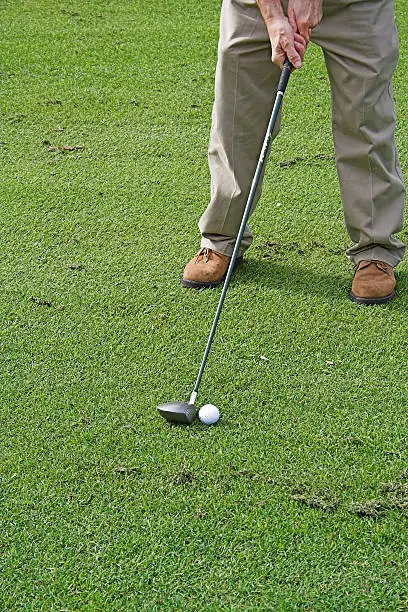
The game of golf exudes tranquility. Your feet possess a wisdom of their own.
A solid swing relies on a strong foundation. Shifts in weight, delicate turns, measured pressure through the leading foot, and a balance that remains unwavering as you spin with velocity. If your footwear lacks stability, has a slippery surface, or constricts your forefoot, your swing will subtly adjust to accommodate these issues. While you may still manage to make some impressive shots, achieving consistency becomes increasingly challenging. Your lower body is experiencing tension. Your feet tire more quickly. As you reach the back nine, what once felt like a “easy tempo” begins to shift into a battle for survival on the course.
That’s why golf shoes serve a practical purpose rather than being a style statement. They are tools. For those with broader feet, they can truly determine whether one feels grounded or unsettled.
This guide delves into the essential elements of golf footwear: stability, traction, and comfort for wider fits. You will discover the key aspects to consider, the pitfalls to steer clear of, and the effective methods to evaluate golf shoes in the comfort of your home, ensuring you aren’t misled by a brief fitting.
The foundation of effective golf footwork lies in maintaining a solid connection with the ground. Top-quality golf shoes offer a broad, stable foundation, a secure grip around the heel, controlled flexibility, and dependable traction for damp and uneven ground. For those with wider feet, it’s essential to have a toe box and platform that accommodate natural toe splay without causing pressure. Failing to do so can result in a loss of balance and power transfer. Select golf shoes by considering the grip of the outsole, the stability for lateral movements, and the genuine comfort they provide throughout 18 holes, rather than solely their feel during a store fitting.
Why your golf shoes influence your swing more than you think
Your swing unfolds like a series of interconnected movements: from your feet to your knees, through your hips, torso, arms, and finally the club. If the initial connection falters, the subsequent ones will make up for it.
Here’s how problems with footwear manifest on the course:
- A snug shoe causes you to tighten your feet and clutch the ground with your toes.
- A gentle, unpredictable midsole causes your weight distribution to feel unsteady.
- Insufficient grip leads to an instinctive reduction in your spin.
- Heel slip alters your pivot mechanics.
Distractions from hot spots and pressure points can interrupt your focus during a round.
This is all quite ordinary. It’s understated. However, in golf, even the slightest adjustments can lead to significant outcomes.
When discussing “good golf shoes,” it’s important to note that comfort is just one aspect of the equation. We’re discussing consistent footwork.
The three pillars: stability, traction, and wide-fit comfort
Consider these as absolute essentials. If one falters, the shoe falters.
1) Stability: the planted feeling that lets you swing freely
Stability is not rigidity for the mere purpose of being rigid. It’s the skill to maintain composure while you engage and pivot.
- A reliable golf shoe generally provides you with:
- A broad foundation beneath you ensures stability and balance.
- A sturdy heel counter to ensure the rearfoot remains securely in place.
- A midsole that maintains its integrity without collapsing sideways during rotation.
Designed for a natural walking experience while allowing for confident pivots.
The “rotation” test you can do at home
Slip on the shoes and take a slow practice swing, even without a club in hand.
Pay attention to your front foot and back foot.
- Do you sense your foot slipping off the edge of the sole?
- Do you sense the shoe compressing to the sides?
- Do you sense the need to “brace” yourself to maintain your balance?
- If so, there is a deficiency in stability.
A reliable shoe brings a sense of tranquility. You spin while the foundation remains steadfast beneath you.
2) Traction: the grip that protects your rotation
Traction isn’t limited to just damp mornings. It’s for each instance where you prepare and pivot.
When traction is lacking, your body compensates by restricting rotation or altering weightdistribution. This may result in irregular contact and diminished power.
- The grip in golf shoes is determined by the design and composition of the outsole.
- Traction zones with spikes or without spikes.
- The width of the outsole is particularly notable, especially beneath the forefoot and heel.
Spiked vs spikeless: the practical truth
Spikes offer a more assertive grip, particularly when the ground is wet.
Spikeless shoes offer greater versatility for both walking and use in the clubhouse, although the quality of traction can differ.
The essential factor isn’t about being “spiked or spikeless.” The crucial factor is your sense of stability when you turn on grass that is a bit moist or not perfectly level.
The “wet grass reality check”
If you’re playing in the UK, you’re well aware of what your course is like for a good part of the year.
Even if you choose to stay indoors during a downpour, the morning dew can render the grass quite slippery. Strong momentum instills a sense of assurance. Self-assurance allows for a natural swing.
3) Wide-fit comfort: space that improves balance and endurance
Having wide feet goes beyond mere comfort. They focus on consistency.
When your forefoot is constricted, your toes are unable to extend freely. The spreading of the toes contributes to stability. When it’s limited, you feel less anchored.
Golf shoes designed for wide-fit comfort should appear as follows:
- A toe box designed for comfort, enabling toes to rest flat without any pressure.
- A space expansive enough to accommodate your presence.
- Upper materials that provide comfort without digging into the sides of the forefoot.
- Ensures a snug fit around the heel without the need for excessive lace tightening.
Completing nine holes with a burning forefoot or numb toes is a clear indication of the consequences that arise when width is overlooked.
When searching for a fit that accommodates wider feet, it’s beneficial to begin in a specialized section such as wide fit golf shoes. From there, you can refine your options using the assessments provided in this guide, ensuring your selection is based on actual performance rather than mere marketing terms.
Why “true size” often fails on the course
Golf involves an extended period of use.
- You walk.
- You stand.
- You twist.
- You shift weight.
- Your feet begin to swell a bit as the round progresses.
- You navigate through unpredictable terrain.
What feels like the ideal shoe in the store could turn out to be tight or unstable as you progress through the back nine.
For golfers with wider feet, this is where the challenges begin. They select the appropriate length but misjudge the width, subsequently tightening the laces for a sense of security, only to compress the forefoot, leading to eventual fatigue.
A golf shoe ought to provide a snug fit without constricting the foot.
The fit checks that matter specifically for golf
Toe box check: toe space under pressure
Stand and softly lean forward as if preparing to take a shot.
- Are your toes pushing against the front?
- Are you experiencing a side squeeze?
- Is your big toe being pushed inward?
If so, you’ll definitely notice it more after reaching 10,000 steps on the path.
Heel check: no slip during a pivot
Execute a series of deliberate pivots as if you are practicing your follow-through.
If your heel keeps lifting, you’ll experience friction, and your pivot will feel less steady. Heel slip goes beyond merely posing a risk for blisters. It’s a problem with the swing mechanics.
Lateral stability check: can the shoe resist side load?
The game of golf requires lateral movement and force. That’s why walking shoes differ from golf shoes.
Transfer your weight to the outer edge of your trailing foot, followed by your leading foot.
You are examining if the shoe buckles sideways.
A quality golf shoe maintains stability, ensuring it doesn’t feel unsteady.
Outsole width check: platform matters
Turn the shoe upside down. Examine the contour of the outsole.
If the forefoot area becomes too constricted, those with wider feet may experience overflow, leading to compromised stability. Comfort extends beyond just the upper. It resides in the foundation.
Comfort over 18 holes is a performance metric
Here’s the truth: golf is too lengthy to put up with a shoe that’s merely “acceptable.”
Discomfort alters your motion. Unease alters your posture. Unease propels you forward. It also heightens weariness, which impacts the quality of swings as the round progresses.
The finest golf shoes fade from your thoughts. That is indeed a flattering remark.
You move, glide, and complete the circle effortlessly, your feet a mere afterthought.
The most common golf shoe mistakes for wide feet
Mistake 1: choosing a narrow shoe for “tight support”
Some players believe that being tight means being stable.
It does not.
Constricted conditions lead to pressure and limit the natural spread of the toes, ultimately diminishing stability. Genuine stability is achieved through a solid base and secure heel hold, rather than by tightening the forefoot.
Mistake 2: sizing up in length to get width
This frequently leads to movement within the shoe.
- Sliding generates areas of intense heat.
- Hot spots lead to the formation of blisters.
- Sliding diminishes pivot control since your foot lacks a stable anchor.
- Adjust the width, but leave the length as is.
Mistake 3: prioritising softness over structure
While plush midsoles may initially provide a sense of comfort, they can compromise stability during rotation, particularly in shoes that are narrow beneath the foot.
In golf, stable cushioning often outperforms “plush” cushioning.
Mistake 4: ignoring traction until you slip once
Traction serves as a safeguard. If you must acquire wisdom through missteps, you have already borne the cost.
How to choose based on your golf style and course conditions
If you walk the course
Emphasize comfort, consistent cushioning, and dependable grip. Walking rounds quickly reveal fitness concerns.
If you ride but still practice a lot
You continue to adjust and redistribute your weight. Even with reduced walking, stability and traction remain important.
If your course is often damp
Opt for more robust traction designs or spikes. Slippery grass tests the strength of a feeble hold.
If you play firm, dry conditions most of the time
Spikeless options offer a more comfortable experience, yet it’s essential to ensure that traction remains dependable during rotation.
If you have wide feet plus foot fatigue
Select a broader platform and a toe box that permits natural splay. Such a factor can significantly enhance stamina.
For a clear beginning, explore wide fit golf shoes and refine your search based on your requirements: grip for damp conditions, support for rotation, and ample toe space for extended play.
A simple pre-round setup that helps your shoes do their job
- Choose the socks you perform in, rather than opting for delicate style socks.
- Ensure your shoes are laced securely around the midfoot and heel, while keeping the forefoot area comfortably loose.
- If you’re experiencing toe pressure before you even start, it’s unlikely to improve by the time you reach hole 12.
- For any identified hot spot, apply tape to it before it develops into a blister.
- Always have an extra pair of socks on hand in case you find yourself sweating a lot or facing the possibility of rain.
- These are simple practices that ensure your shoes remain in good condition.
FAQs
Do wide feet actually affect golf performance?
Yes, indirectly. When your forefoot is constricted, it hinders the natural spread of your toes and diminishes your sense of stability. Discomfort can alter swing mechanics, particularly as the round progresses.
Are spiked golf shoes always better?
Not always. Spikes enhance grip in wet conditions, yet spikeless shoes can perform effectively if they feature a robust traction pattern. Select according to your course requirements and your sense of stability while rotating.
Should golf shoes feel tight for stability?
They ought to experience a sense of security, rather than constriction. Constricted sensations lead to a sense of pressure and limit mobility. The foundation of stability lies in the platform and the grip of the heel.
How can I test traction at home?
While it’s impossible to replicate turf conditions indoors, you can assess pivot confidence on secure surfaces and examine the outsole design. During your initial round, take note of any hesitation you experience when rotating on damp lies.
What’s the fastest sign my golf shoes are too narrow?
Common signs include toe squeezing, side pressure at the forefoot, numbness, and redness following the round. If it feels tight in the store, it often feels even more uncomfortable after a full round of golf.
Final takeaway
The foundation of golf footwork begins with the ground beneath you. If your footwear lacks stability, traction, and sufficient comfort, your body will adjust, and your performance will suffer as a result.
- A quality golf shoe provides a solid foundation as you engage and pivot.
- It clings to the ground when the atmosphere is moist.
- It allows your toes to expand freely, creating a sense of balance that feels effortless and organic.
- It remains so comfortable that it fades from your mind.
If you’re on the lookout for options that cater to wider feet while emphasizing essential features, begin with wide fit golf shoes and select according to the fit and performance criteria outlined in this guide.
Your swing is already filled with numerous variables. Your footwear ought to be excluded from that list.
