
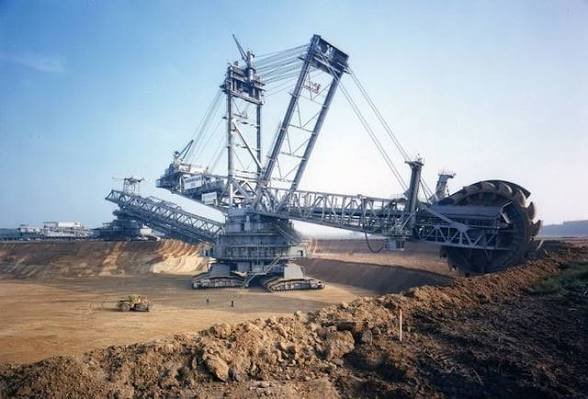
There is an understandable instinct when hiring or buying equipment. Bigger machines move more material, so the largest affordable option should finish the job soonest. The instinct is understandable, and it is surprisingly often expensive. On a wide open site with nothing in the way, that logic holds. Everywhere else, it starts to come apart, and the reasons are worth understanding before the order is placed.
Capability Is Not the Only Question
A machine’s rated capacity describes what it can do in ideal conditions. Real sites are rarely ideal. The relevant question is not how much the machine could move, but how much it will actually move given the space available, the ground it stands on, the material it handles and the trucks waiting to be filled.
Capacity that cannot be used is simply weight being carried around a site. A larger excavator loading trucks that arrive every fifteen minutes will spend most of its time waiting. The extra capacity produces no additional output, and the operation pays for it in fuel, transport and hire rates regardless.
Access Decides More Than Power
Space is the constraint that dominates most decisions. A machine that cannot reach the work area is of no use at any capacity, and machines grow in every dimension at once.
Residential sites, established industrial areas and anything behind a building present width restrictions, overhead limits and turning constraints. A machine that fits through the gate but cannot rotate without striking a fence will work at a fraction of its capability, and will damage something eventually.
Overhead cables and low branches constrain the machine just as effectively as a narrow gate does. Working close to structures makes this worse. Larger machines need larger exclusion zones, and where those zones cannot be maintained, work slows to accommodate the risk. A smaller machine that can operate normally often finishes ahead of a larger one operating carefully.
The Cost of Capacity Nobody Uses
Every increase in size carries costs that continue whether the capacity is used or not.
Fuel consumption rises with engine size, and a large machine working at partial load is inefficient in a way that shows up weekly. Hire rates scale with capacity. Wear costs scale with weight, since heavier machines are harder on undercarriage, pins and bushes. Tyres and tracks are larger, filters are larger, and every fluid change involves more litres. Even routine servicing costs more, because there is more of everything to service.
None of this is a problem when the capacity is being used. All of it is waste when it is not.
Transport Multiplies the Difference
The step from a machine that travels on a standard trailer to one requiring a low loader and a permit is a large one. It adds cost, lead time and administrative work to every single movement.
For a project involving several site changes, that difference accumulates quickly. A slightly smaller machine that moves without permits may complete the same programme at lower total cost even if each individual task takes marginally longer.
Ground Conditions and What Gets Damaged
Heavier machines exert more ground pressure, which matters on soft ground, over services, on finished surfaces and near existing structures.
Reinstatement work rarely appears in the original comparison and always appears in the final account. Damage caused by an oversized machine is rarely included in the original comparison. Rutted access roads that need reinstating, a cracked slab, a disturbed service or a lawn that has to be replaced all belong on the invoice for the decision that put the larger machine on site.
Two Smaller Machines Instead of One Large One
An option worth considering more often is splitting the work. Two smaller machines can work in separate areas simultaneously, which frequently produces more output per day than a single larger machine working alone, particularly on sites where the work is spread out rather than concentrated.
The arrangement also suits sites where different trades need machines in different places at once. It adds an operator and a second hire cost, and it removes the bottleneck of everything waiting on one machine. It also provides redundancy: if one machine stops, work continues at reduced pace rather than stopping entirely.
Matching the Machine to the Attachments
Attachment demand is a specification that gets overlooked. Powered attachments draw flow and pressure from the machine’s hydraulic system, and a machine that cannot supply what an attachment requires will run it poorly and generate heat doing so.
Suppliers will confirm flow and pressure requirements if asked, and the question takes a minute. The opposite mistake also occurs. Fitting an undersized attachment to a large machine wastes the machine’s capability and can damage the attachment through forces it was never designed to absorb. Either mismatch generates heat and stress, and sustained heat is what eventually turns into hydraulic motor repairs that a correctly matched combination would have avoided entirely.
Asking Better Questions Before Hiring
A few questions produce better decisions than a capacity comparison. What is the narrowest point the machine must pass through? What is the ground like after rain? How much material actually needs moving, and over what period? What is waiting on the machine, and what is the machine waiting on? Which surfaces must survive the project intact?
Answers to those questions usually point at a specific size range rather than the largest available, and the range is often smaller than the initial instinct suggested.
Right Sizing as a Habit
The most productive operations tend to be the ones that treat machine selection as a genuine decision rather than a default. They ask what the site allows, what the schedule requires and what the work actually involves, and they choose accordingly.
That habit produces sites that run smoothly, budgets that behave predictably and machines that finish the day having done useful work rather than having demonstrated capability nobody needed. It also makes hire conversations shorter, because the requirement has already been thought through. It is a quieter kind of efficiency, and it compounds across every project a business takes on.
