


Michael Carrick has always spoken about football in the language of structure and control. As a player he dictated the rhythm of matches from deep midfield, and as a coach he has built a side that does the same thing as a team. Two months into the job, the shape of his Manchester United is clear — and, for the most part, it is working.
Here is how this United team sets up, and what it tells us about Carrick’s football.
The Shape: A 3-4-2-1
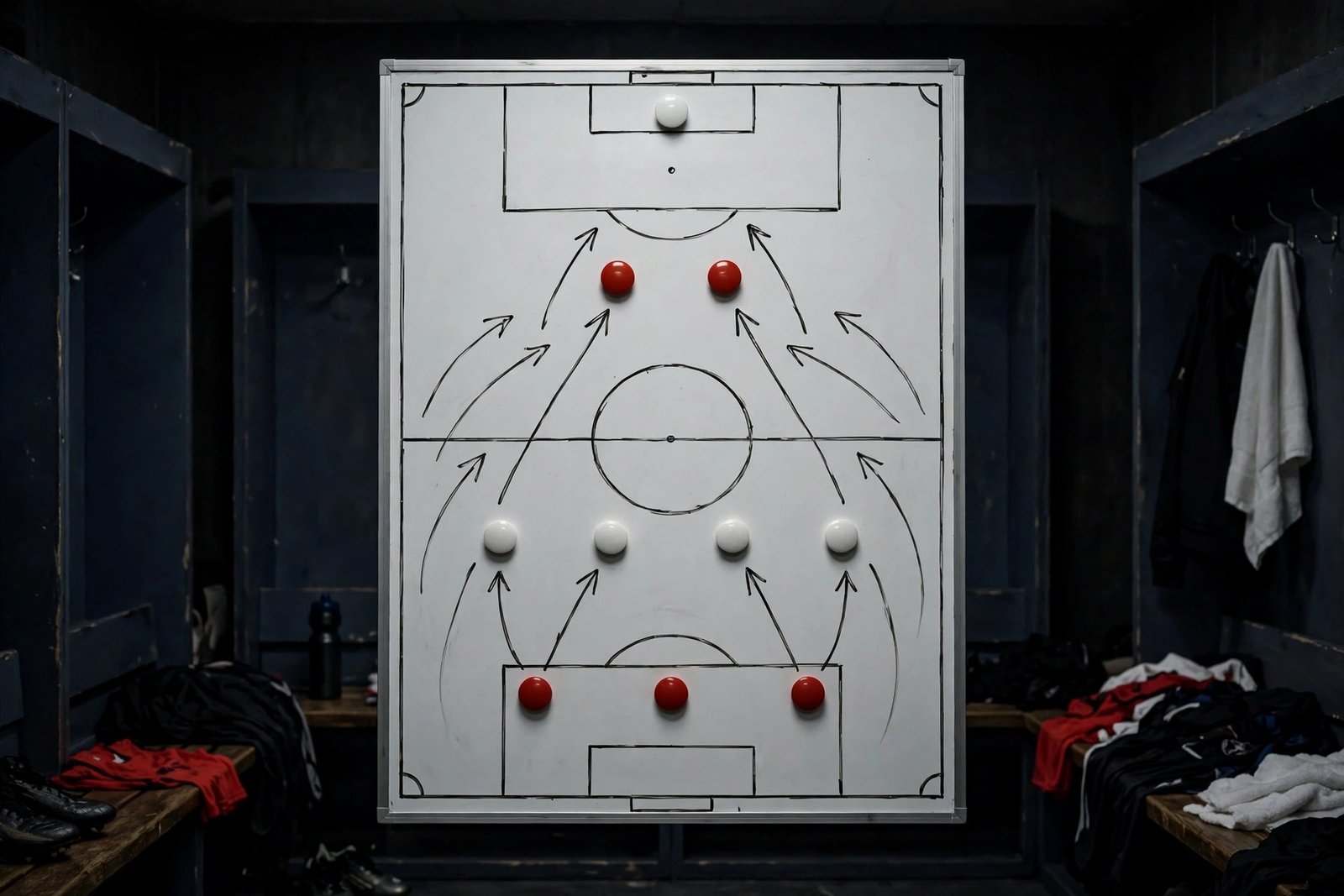
Carrick has settled on a 3-4-2-1, the same structure he used at Middlesbrough. Three centre-backs, two wing-backs, two central midfielders and two number 10s behind a single striker. It looks cautious on paper, but in practice it is one of the most attack-minded systems in the league — the wing-backs are expected to live on the touchline, and the two number 10s are given freedom to roam between the lines.
The key numbers tell the story. United average more than two goals a game since the change, and the wing-backs have already contributed nine goal involvements between them. This is not a system that sits back and waits: it is designed to dominate the ball and pin opponents into their own third.
Build-Up: Patient, Then Suddenly Vertical
The build-up starts with the three centre-backs spreading wide and the goalkeeper joining the line. The two midfielders drop in to form passing angles, and the wing-backs push high. The idea is to draw the opposition forward, then break their press with one vertical pass into the number 10s, who turn and run at the back line.
It works beautifully when the press is beaten. The 4-1 win over Roma in the Europa League was the clearest example yet: United played through the press time and again, and the two number 10s were involved in all four goals. The risk, of course, is the turnover. When the vertical pass goes wrong, the wing-backs are stranded and the back three are exposed — and that is where United have been hurt, as our analysis of the problems Michael Carrick must fix explains.
The Press: High and Organised
Out of possession, United press high and in a structured way. The striker leads the press, angling the play to one side, and the two number 10s jump onto the opposition’s holding midfielders. The wing-backs push up to press the full-backs, and the whole team moves as a unit — a long way from the shapeless pressing of last season.
The numbers back it up. United win the ball in the final third more often than any team in the league, and the goals that follow from those regains have been a feature of the recent run. It is a system that demands concentration and fitness, but when it clicks, it is suffocating.
The Number 10s: Where the Magic Happens
The two number 10s are the heart of Carrick’s team. Matheus Cunha and Mason Mount have been the regulars, with Bryan Mbeumo also used there, and the role suits all three: they are given freedom to drift, to combine, and to arrive in the box late. Cunha, in particular, has thrived — his goals and assists since the change of system are the best of his United career.
The two number 10s also do the unglamorous work. They are the first line of the press, and they are expected to track back and fill the midfield when the wing-backs are caught high. It is a demanding role, and it is no coincidence that the team’s best performances have come when both are fit and firing.
The Weaknesses: Width, and the Second Ball
No system is perfect, and Carrick’s has two clear weaknesses. The first is width: with the wing-backs pushed high, the space behind them is the obvious target for opponents, and the back three have to be brave in covering it. The second is the second ball: when the long ball goes over the press, the two central midfielders can be overrun, and the defence is left exposed.
Both problems were visible in the recent defeats, and both are fixable — with better recruitment, with more time on the training ground, and with the kind of squad depth that Carrick does not yet have. For the strongest possible version of this team, see Man Utd’s best XI when everyone is fit.
The Verdict: A System Worth Building On
Two months in, the verdict is clear. Carrick has given United a shape, a plan and an identity — three things that were missing for most of the last decade. The football is front-footed, the players look like they know what they are doing, and the results are following. There are weaknesses, but they are the weaknesses of a system that is still being built, not of one that is fundamentally broken.
Whether it is enough to win the biggest prizes is the question that will define the rest of the season. But for now, United finally look like a team with a plan — and that, after years of improvisation, is progress. Watch, in particular, Amad Diallo’s wing-back role: if he keeps producing the numbers he has in his first games there, he may be the player who turns this system from promising to genuinely dangerous.
