


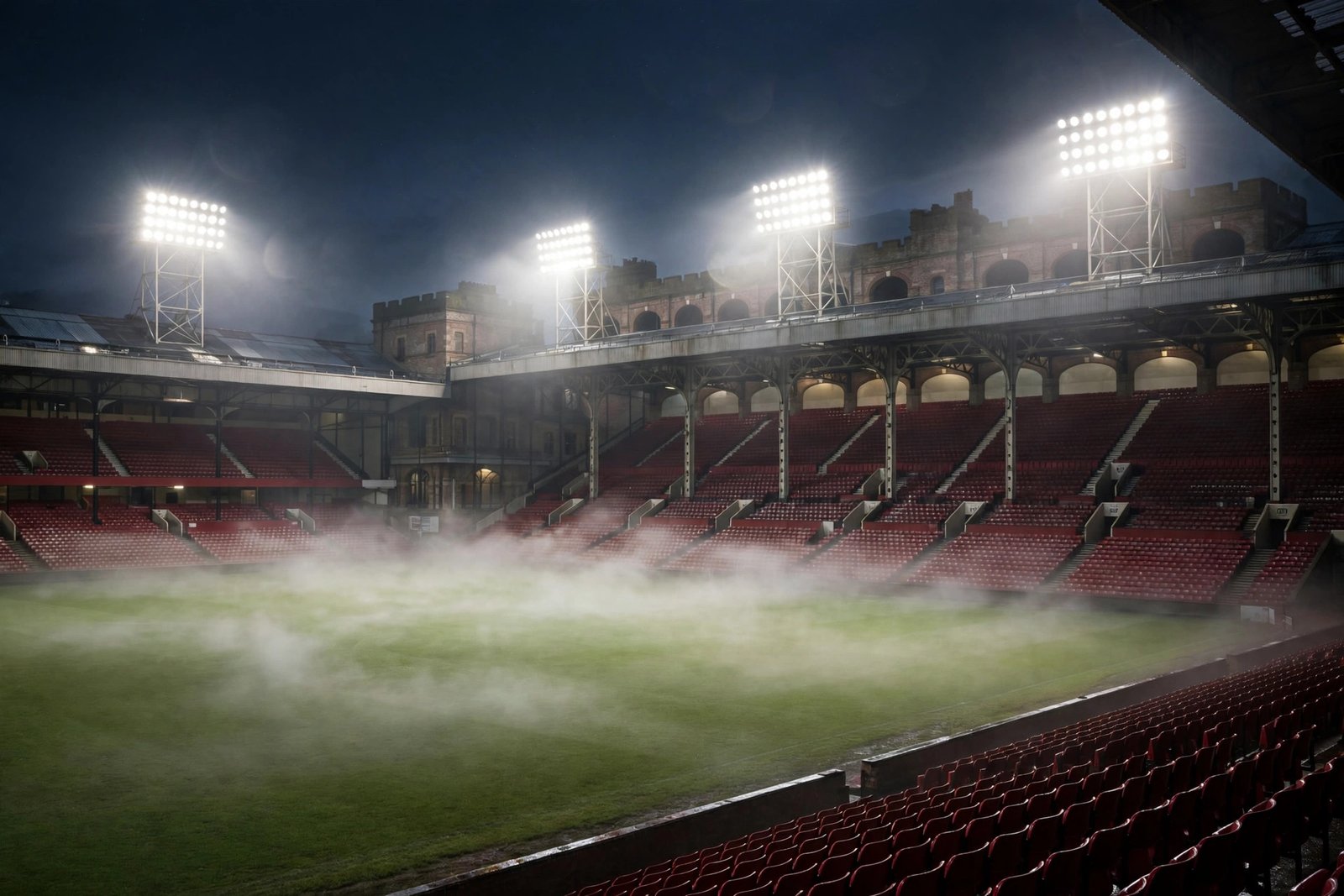
Old Trafford is called the Theatre of Dreams because Sir Bobby Charlton — Manchester United’s greatest servant, a Busby Babe and a Munich survivor — described it that way, and the phrase captured something about the place that nobody has improved on since. It is now the most famous stadium nickname in English football, printed on the stadium itself and repeated by every visiting supporter on earth. But it was not a marketing invention. It was one man’s attempt to explain what the ground means.
The Man Who Coined It
Charlton’s words, as they entered print in John Riley’s 1987 book about the club, were simple: “This is Manchester United Football Club. This is the Theatre of Dreams.” Versions of the sentiment trace back even earlier, to interviews around the club’s centenary in 1978, when Charlton spoke about the supporters — the people on the terraces whose whole lives revolved around coming to the ground — as being part of a never-ending story, a theatre of dreams. The phrase did not become the stadium’s everyday name overnight. It spread through the 1990s, precisely as Ferguson’s teams began filling the place with the kind of nights the nickname describes, and by the turn of the century it belonged to the ground itself.
A Ground Built for Dreams
The stadium Charlton was describing had been dreaming big since before he was born. Old Trafford opened on 19 February 1910 — United lost the first match 4-3 to Liverpool, of all teams — designed by Archibald Leitch, the architect of half the great grounds in Britain, and built for a then-enormous sum in the region of £60,000. A journalist at the opening called it the most handsome and capacious arena in the country. The name “Old Trafford” itself simply comes from the district, which took its name from the old Trafford Hall. What turned a big Edwardian ground into a theatre was everything that happened inside it afterwards — which is where our run through the greatest moments in Old Trafford’s history picks up the story.
What the Name Really Means
It is worth understanding what Charlton meant, because the phrase is often quoted and rarely examined. He was not talking about architecture. He was talking about two things. The first is the players: for a young footballer, walking out at Old Trafford is the dream made real — the ground as the stage where boys from the academy, from Manchester and from every corner of the world get to become somebody. Charlton lived that journey himself, from Ashington to the Busby Babes to European champion. The second is the supporters: the dreams are theirs, renewed every August, carried through every winter, handed down like heirlooms. A theatre needs both — performers and an audience that believes. Old Trafford’s nickname works because it honours both at once.
The Munich Shadow
There is a deeper layer, and it is impossible to separate the name from the man. Charlton survived the Munich air disaster in February 1958, pulled from the wreckage of the flight that killed eight of his team-mates. When he spoke of dreams at Old Trafford, he spoke as someone who had seen the club’s brightest generation taken in an afternoon and had then spent a decade helping to rebuild what they had started — a story told in full in our piece on the Busby Babes and Munich. For Charlton, the ground was where the Babes’ dreams had been both made and mourned, and where, in 1968, they were finally fulfilled. “Theatre of Dreams” is a romantic phrase. From his mouth, it was also a memorial.
The Name in the Modern Era
Today the nickname is part of the furniture — literally. It greets visitors at the stadium, anchors the tour experience (our Old Trafford tour and museum guide walks through what you will see), and in 2016 the club renamed the South Stand the Sir Bobby Charlton Stand, fixing the name-giver into the ground’s geography for good. For the club’s global support, the phrase does work no other stadium nickname can: millions of fans who may visit Manchester once in a lifetime grow up measuring that pilgrimage against two words. Players talk about it the same way. Signing after signing, from every continent, describes the same ambition in the same vocabulary — to play at the Theatre of Dreams — and whatever scouts and spreadsheets say about modern transfers, that pull is real, and it is worth money, points and trophies across a decade. A nickname that helps you recruit is not decoration; it is infrastructure. Charlton, characteristically, never treated it as his property. He gave the words to the club the way he gave it everything else, and the club has been spending them, carefully, ever since. Rival fans, inevitably, use the phrase ironically in lean years, and the debate about the stadium’s future — repair, redevelop or rebuild — has given the old words a new edge. But nicknames outlive form. Liverpool’s ground is Anfield, Arsenal’s was Highbury; a name is just geography. “The Theatre of Dreams” is a claim about what a place is for — and the man who made the claim earned the right to make it like nobody else in the club’s history.
